A path back to you
In a fast-paced world that demands immediate answers and constant productivity, many people live disconnected from themselves without even realizing it. Their bodies tense up, their minds race, and their hearts grow weary. Amidst this accelerated rhythm, yoga emerges not as a fad or a passing trend, but as an ancient science of self-knowledge that, now more than ever, resonates deeply.
Yoga is not just stretching and relaxing. Nor is it limited to a series of pretty poses or a moment of superficial calm. Yoga is a path of inner transformation, a holistic practice that works from the inside out, harmonizing body, breath, mind, and consciousness.
Calming the mind: The first great gift of yoga
According to the Yoga Sutras of Patanjali, one of the foundational texts of classical yoga, “Yoga is the cessation of the fluctuations of the mind” (Yogaś citta-vṛtti-nirodhaḥ). This does not mean emptying the mind, but rather learning to observe it, to avoid getting caught up in its constant noise.
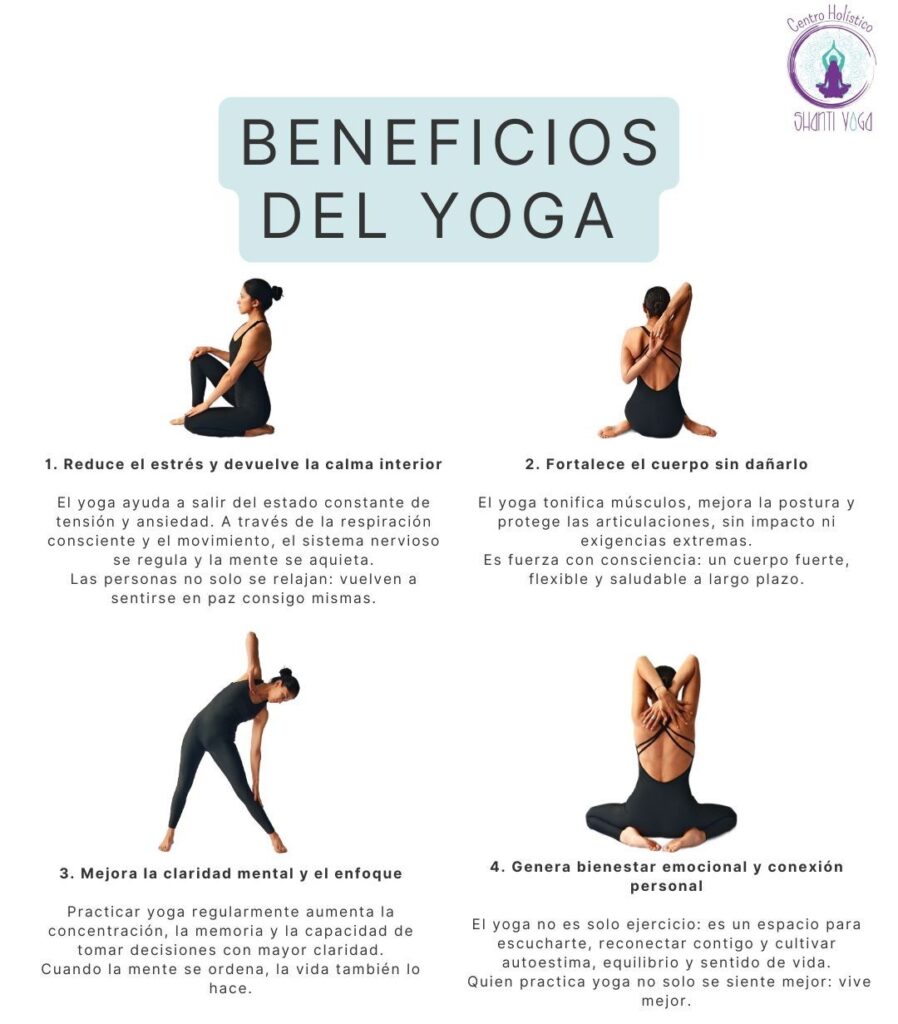
The practice of yoga—through mindful breathing, conscious movement, and meditation—helps reduce stress, anxiety, and mental overload. Gradually, the practitioner discovers they can respond to life with greater serenity instead of reacting automatically. When the breath becomes still, the mind becomes ordered; and when the mind is calm, life begins to feel more livable.
A strong, conscious, and respected body
Classical yoga never separated the body from consciousness. The asanas were not created merely to strengthen or increase flexibility, but to prepare the body as a stable and healthy vehicle for life and for inner practice.
Unlike other methods that force or demand, yoga teaches you to listen to your limits, respect your body’s processes, and inhabit it with kindness. With consistent practice, posture improves, deep muscles are strengthened, joints are cared for, and a new relationship with your body awakens: a relationship based on respect, not demands.
The body ceases to be an enemy or a burden, and becomes an ally on the path to well-being and presence.
Clarity, focus, and presence in everyday life
One of the great changes that yoga brings isn’t always visible from the outside, but it’s felt deeply in daily life. The practice develops mindfulness (smriti), the ability to be present in what we are doing.
This translates into greater mental clarity, better decision-making, and a more conscious approach to challenges. It’s not about problems disappearing, but about learning to navigate them with greater balance. Yoga reminds us that true stability depends not on external factors, but on our internal relationship with what happens.
Listening to you again: the encounter with yourself
Perhaps one of the most transformative aspects of yoga is the space it creates for self-discovery. In practice, you learn to listen to yourself, to recognize your emotions, your rhythms, and your true needs. In a world that constantly encourages comparison and demands, yoga proposes a return to the center, to authenticity.
Practicing yoga is an act of profound self-care, but also of honesty. It shows us where we are, without judgment, and from there invites us to grow.
Yoga as a necessity, not as a luxury
Far from being a privilege or an elitist practice, yoga is a contemporary necessity. In a society that never stops, yoga teaches us to pause without guilt, to breathe consciously, and to live with greater coherence.
It doesn’t promise magic solutions or immediate changes. It offers something more valuable: a steady, patient, and profound path of transformation.
Because, in the end, yoga is not about changing who you are.
It seeks to remind you who you are, when the noise quiets down and consciousness awakens.
Namaste !!
May your practice be a loving return to yourself.
“Why Can Yoga Change Your Life?”